Product Description
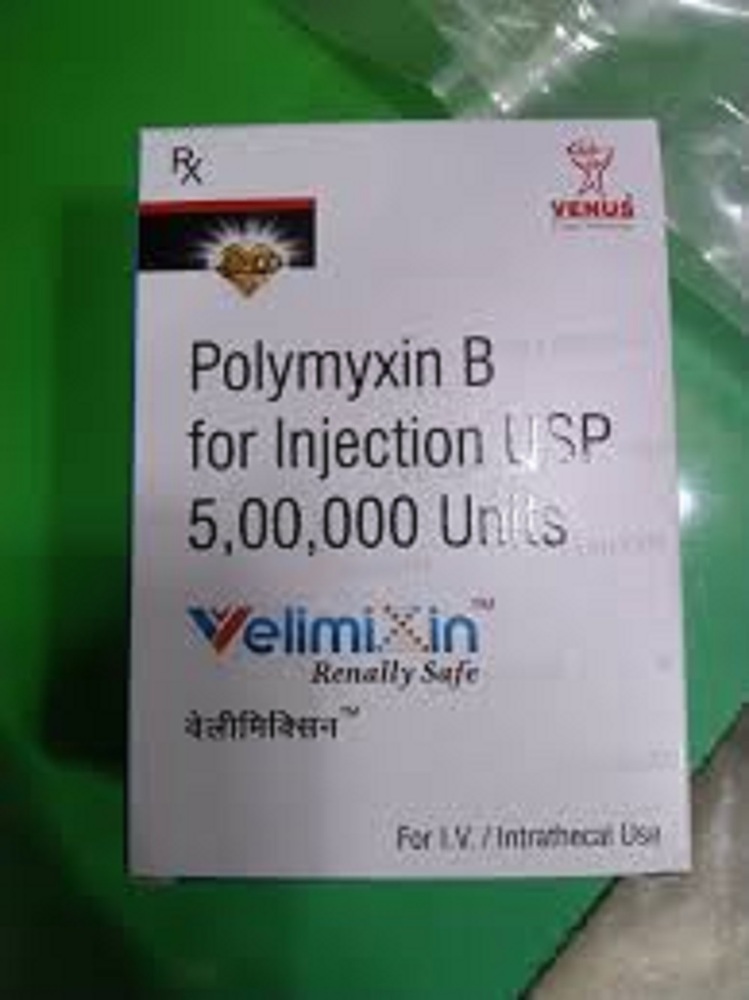
Velimixin 500000IU Injection is given under the supervision of a healthcare professional. You should get the injections at the same time each day to get the most benefit and you should keep on taking this medicine for as long as you are prescribed it, even if your symptoms quickly improve. If you stop taking it too early the infection may return or worsen.
Some people may develop side effects like anaphylactic reaction, kidney damage, neurotoxicity, fever, or pain, redness, and swelling at the site of injection. These side effects are usually temporary and go away during treatment as your body adjusts to the medicine. Consult your doctor if these side effects bother you or will not go away.
Before starting treatment with this medicine, you should tell your doctor if you are allergic to any antibiotic or have any liver or kidney problems. Pregnant women should consult their doctor before using it. Your doctor may get regular blood tests done to monitor kidney function.
Powerful Antibiotic for Serious Bacterial InfectionsVelimixin 500000 IU Injection is specially designed to combat severe infections caused by Gram-negative bacteria, including Pseudomonas aeruginosa. As part of the Polymyxins therapeutic class, this injection helps address hospital-acquired and other critical infections when other antibiotics may not be effective, offering a vital solution for healthcare professionals.
Easy Reconstitution and AdministrationVelimixin comes as a lyophilized powder that must be reconstituted with sterile water for injection. It is suitable for both intravenous and intramuscular use, with dosing tailored by a qualified physician. The clear instructions provided ensure accurate preparation and administration for optimal therapeutic results.
Quality and Safety AssuranceManufactured under GMP standards, Velimixin 500000 IU Injection meets stringent quality controls to ensure patient safety and consistent therapeutic effects. Its 24-month shelf life and protective packaging support long-term storage and ready availability in clinical settings.
FAQ's of Velimixin 500000 Iu Injection:
Q: How should Velimixin 500000 IU Injection be prepared and administered?
A: Velimixin 500000 IU Injection must be reconstituted with sterile water for injection before use. It can be administered either intravenously (IV) or intramuscularly (IM) as directed by your physician. Dosage and route depend on the infection's severity and the patient's medical condition.
Q: What types of infections is Velimixin 500000 IU Injection recommended for?
A: This injection is indicated for the treatment of serious infections caused by susceptible strains of Pseudomonas aeruginosa and other Gram-negative bacteria, especially when other antibiotics are not suitable or effective.
Q: When should Velimixin 500000 IU Injection be used?
A: Velimixin should be used when prescribed by a healthcare professional for confirmed or suspected serious Gram-negative bacterial infections. Treatment initiation and duration are determined by the treating physician.
Q: Where should Velimixin 500000 IU Injection be stored?
A: Store the injection below 25C and protect it from light to maintain its potency. Always keep it in its original packaging until ready for use.
Q: What are the key benefits of using Velimixin 500000 IU Injection?
A: Velimixin delivers potent antibacterial activity against challenging Gram-negative bacterial infections. Its formulation allows for IV or IM administration, making it versatile in different clinical scenarios and effective in treating serious infections.
Q: Is a prescription required to obtain Velimixin 500000 IU Injection?
A: Yes, Velimixin is a prescription medication and should only be used under the supervision of a qualified healthcare professional.
Q: What precautions should be taken during the use of Velimixin?
A: Use Velimixin strictly as directed by your physician. Follow proper reconstitution and administration procedures, and monitor for any adverse reactions. Ensure appropriate storage conditions and never use the vial beyond its expiry date.