Product Description
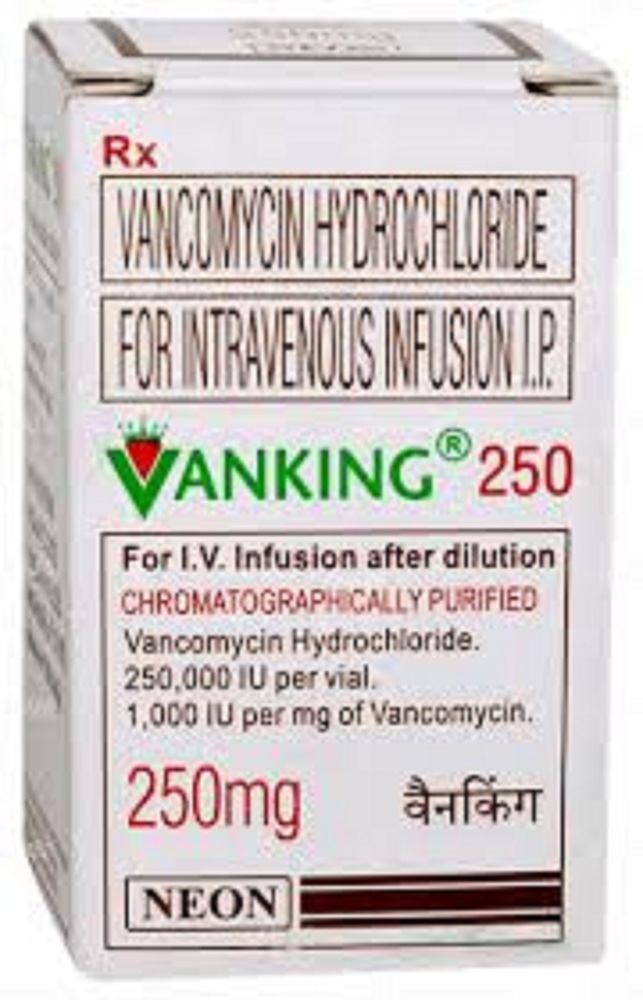
Vanking 250 mg Injection is composed of 'Vancomycin'. It kills bacteria by preventing them from forming the bacterial protective covering (cell wall), which is needed for them to survive.
Vanking 250 mg Injection will be administered by a healthcare professional; do not self-administer it. Common side effects of Vanking 250 mg Injection are application site reactions like pain, redness, and swelling. Most of these side effects do not require medical attention and gradually resolve over time. If these side effects persist longer, please consult your doctor.
Let your doctor know if you have liver/kidney diseases, hearing problems, and stomach/intestinal disorders before starting Vanking 250 mg Injection. Do not use Vanking 250 mg Injection while getting vaccinated with live bacterial vaccines (typhoid vaccine) since Vanking 250 mg Injection may affect vaccines' activity. Pregnant and breastfeeding women should consult the doctor before starting Vanking 250 mg Injection. Avoid alcohol consumption to prevent any undesired effects while using Vanking 250 mg Injection. Vanking 250 mg Injection should be used for children only when prescribed by a doctor, depending on the child's age and body weight.
Effective Solution for Severe InfectionsVanking Vancomycin 250 mg Injection provides powerful antibacterial action against serious infections, especially hospital-acquired and methicillin-resistant strains. Its role in critical settings makes it a vital option for healthcare professionals managing difficult infections. Quick preparation and precise administration help ensure optimal efficacy.
Strict Prescription and Administration ProtocolsThis injectable antibiotic requires a physician's prescription and must be diluted appropriately before intravenous use. Administration should always be carried out in a clinical setting, overseen by healthcare experts, to closely monitor therapeutic response and avoid potential complications such as red man syndrome or nephrotoxicity.
Quality, Stability, and StorageEach vial of Vanking Vancomycin is manufactured to exacting standards, with a stable shelf life of 24 months from the date of production. For best results, store under 25C and keep it away from light. This rigorous quality control ensures safety and potency for patients in need.
FAQ's of Vanking Vancomycin 250 Mg Injection:
Q: How should Vanking Vancomycin 250 mg Injection be administered?
A: This injection must be administered slowly by intravenous infusion over at least 60 minutes. It should not be given intramuscularly or as a rapid bolus injection, as these methods increase the risk of side effects.
Q: What is the process for preparing the injection before use?
A: Vanking Vancomycin comes as a white to off-white lyophilized powder. It must be reconstituted with an appropriate diluent before infusion. Preparation and administration should be performed by trained medical personnel under sterile conditions.
Q: When is Vancomycin 250 mg Injection recommended for use?
A: It is indicated for the treatment of serious or severe infections, particularly those caused by susceptible strains of methicillin-resistant staphylococci, such as MRSA, and other hospital-acquired bacterial infections when other antibiotics are ineffective.
Q: What are the common side effects of this medication?
A: Common side effects include red man syndrome (flushing, rash), nephrotoxicity (kidney issues), ototoxicity (hearing issues), phlebitis (vein irritation), and skin rash. Immediate medical attention should be sought if severe symptoms develop.
Q: Where should Vanking Vancomycin Injection be stored?
A: Store the vials in a cool place below 25C and protect them from light. Do not use beyond the expiry date indicated on the packaging.
Q: Who should not receive this antibiotic?
A: This medicine is contraindicated in individuals with known hypersensitivity to vancomycin or any other component of the formulation. Inform your doctor about any allergies before starting treatment.
Q: What are the benefits of using Vancomycin Hydrochloride for infections?
A: The major benefit is its proven effectiveness against difficult-to-treat, resistant bacterial infections, such as those caused by MRSA. Its use is vital in hospital settings where conventional antibiotics fail.