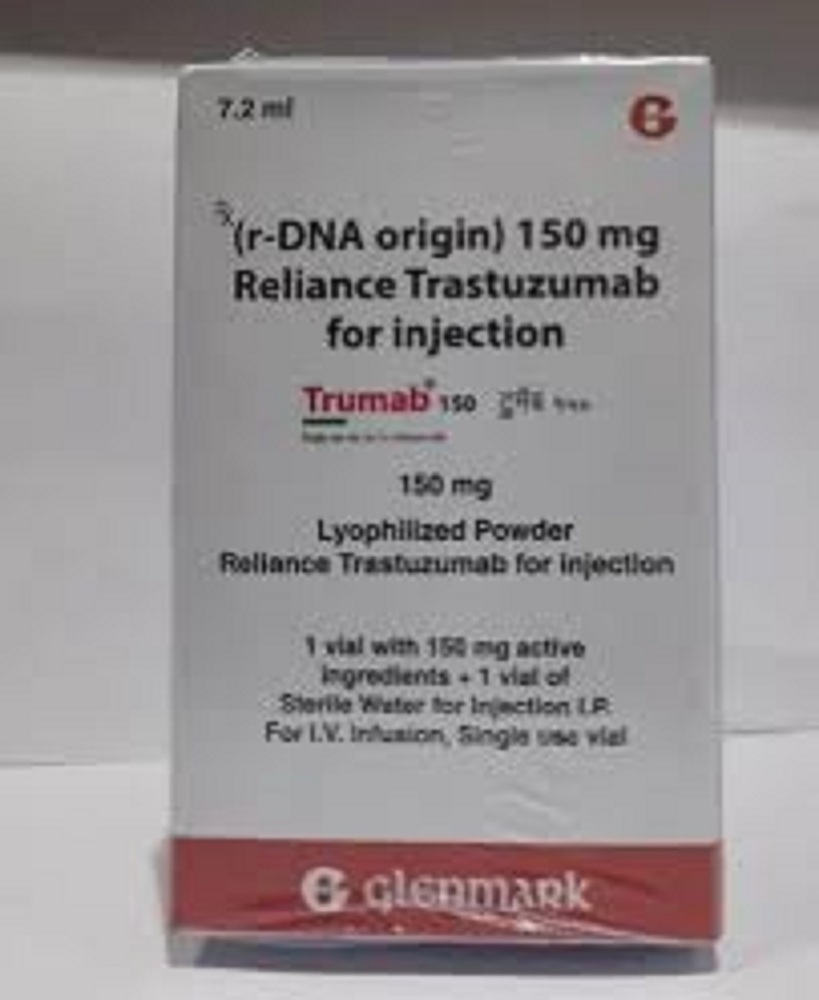
Product Description
Trumab 150mg Injection is given as an injection by a qualified medical professional. Your doctor will decide what dose is necessary and how often you need to take it. This will depend on what you are being treated for and may change from time to time. You should take it exactly as your doctor has advised. Taking it in the wrong way or taking too much can cause very serious side effects. It may take several weeks or months for you to see or feel the benefits but do not stop taking it unless your doctor tells you to.
The most common side effects of this medicine include nausea, headache, rash, insomnia, and infection. This medicine may reduce the number of blood cells (decrease red blood and white blood cells) in your blood, thereby, increasing the susceptibility to infections. Regular blood tests are required to check your blood cells along with heart, liver, and blood uric acid levels. You must have to inform your doctor if you experience breathlessness, cough, shivering, swelling of legs and arm.
Many other medicines can affect, or be affected by, this medicine so let your healthcare team know all medications you are using. This medicine is not recommended during pregnancy or while breastfeeding. The use of effective contraception by both males and females during treatment is important to avoid pregnancy.
Innovative Targeted Cancer TherapyTrumab contains trastuzumab, a monoclonal antibody that specifically targets HER2 receptors found in certain types of breast and gastric cancers. By interfering with HER2 signaling, it helps control tumor growth and progression, making it an important treatment option in modern oncology. Its use is recommended for adults diagnosed with HER2-positive cancers, following strict medical supervision and dosing guidelines.
Safe Handling and Administration PracticesFor best efficacy and safety, Trumab must be reconstituted with sterile water and administered intravenously by healthcare professionals experienced in cancer therapy. Proper storage conditions (2C-8C, away from light, never frozen) must be adhered to. Regular patient monitoring during and after infusion helps manage possible reactions, and individuals should inform their doctor about heart health or pregnancy prior to treatment.
FAQ's of Trumab Trastuzumab 150 Mg Injection:
Q: How should Trumab Trastuzumab 150 mg Injection be stored before use?
A: Trumab should be kept at 2C to 8C, protected from light, and not frozen. Proper refrigeration extends its shelf life up to 24 months from the date of manufacture.
Q: What is the recommended process for preparing and administering Trumab?
A: Trumab comes as a lyophilized powder and must be reconstituted with sterile water for injection. The solution is then administered intravenously according to the dosing schedule prescribed by the treating physician.
Q: Who can benefit from using Trumab Trastuzumab 150 mg Injection?
A: Adult patients diagnosed with HER2-positive breast cancer or HER2-positive metastatic gastric cancer may benefit from Trumab therapy, as determined by their healthcare provider.
Q: When and how often is Trumab typically administered?
A: Trumab is usually given as an initial intravenous loading dose of 8 mg/kg, followed by maintenance doses of 6 mg/kg every three weeks, as directed by the physician.
Q: What precautions should patients take before starting Trumab therapy?
A: Patients should inform their healthcare provider about any heart conditions and disclose their pregnancy or lactation status, as Trumab may affect cardiac function and fetal health.
Q: Why should Trumab not be substituted or interchanged with other trastuzumab products?
A: Trumab should not be substituted with other trastuzumab products without explicit medical advice, as variations in formulations or administration could impact safety and efficacy.
Q: What are common side effects associated with Trumab Trastuzumab 150 mg Injection?
A: Some patients may experience infusion-related reactions, fever, chills, nausea, rashes, or cardiac dysfunction. Medical supervision ensures timely management of any adverse effects during treatment.