Product Description
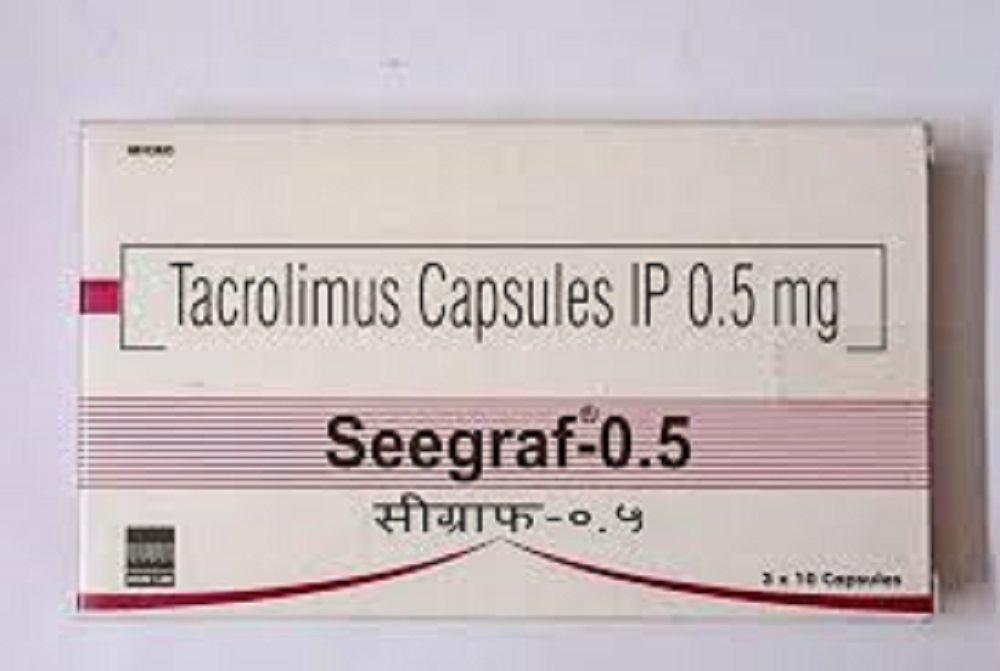
Seegraf 0.5 CAPSULE is used along with other medicines to prevent your body from rejecting a new organ (e.g., liver, kidney, or heart) after transplant. It does so by weakening your bodyis immune system, so it does not attack the new organ. This medication belongs to a class of drugs known as immunosuppressants.The amount of Seegraf 0.5 CAPSULE you take and how often you take it depends on the type of transplant you have, your body weight, and what other medicines you are taking. Follow your doctoris instructions carefully. You should take it on an empty stomach, at least 1 hour before or 2 hours after a meal. Take this medicine regularly to get the maximum benefit and keep taking it, even if you feel well. If you stop taking it, you may increase the chances of rejecting your transplanted organ.
Effective Transplant Rejection PreventionSeegraf is primarily recommended to reduce the risk of organ rejection following kidney, liver, or heart transplantation. Its active ingredient, tacrolimus, suppresses immune responses that could harm or reject the new organ, significantly improving long-term transplant outcomes.
Precise Dosage and AdministrationThis capsule form ensures accurate dosing and convenient oral administration-usually once or twice daily as directed by your healthcare provider. Taking Seegraf on an empty stomach boosts its absorption and effectiveness, so follow your doctor's timing and instructions.
Safe Storage and PackagingSeegraf comes securely packaged in blister strips, protecting each dose from light and moisture. To maintain potency, store the capsules below 30C in a dry environment away from direct sunlight. Each box contains 10 strips, ensuring an adequate supply for ongoing therapy.
FAQ's of Seegraf 0.5 Mg Capsules:
Q: How should Seegraf 0.5 mg Capsules be taken for best results?
A: Seegraf capsules should be taken orally, preferably on an empty stomach, or exactly as advised by your physician. Consistent timing enhances absorption, so try to take each dose at the same time every day.
Q: What is the primary benefit of using Seegraf after an organ transplant?
A: Seegraf helps prevent organ rejection by suppressing the immune system's response to the transplanted kidney, liver, or heart, fostering better long-term acceptance and function of the new organ.
Q: When is it necessary to take Seegraf capsules?
A: Seegraf is prescribed immediately after a kidney, liver, or heart transplant and must be continued as part of your long-term therapy to maintain the success of your transplantation.
Q: Where should Seegraf 0.5 mg Capsules be stored for optimal shelf life?
A: Store Seegraf capsules below 30C, away from moisture and direct light, in their original blister packaging to ensure stability and effectiveness up to 24 months from the manufacturing date.
Q: What major drug interactions should be considered with Seegraf capsules?
A: Seegraf may interact with medicines that affect the CYP3A4 enzyme, such as certain antibiotics, antifungals, and anticonvulsants. Inform your doctor of all medications you are taking before starting Seegraf.
Q: What are common side effects associated with Seegraf?
A: Possible side effects include tremors, headache, diarrhea, increased blood sugar, and potential kidney problems. Contact your doctor if you experience severe or persistent symptoms.
Q: What is the correct process for using Seegraf 0.5 mg Capsules?
A: Always use Seegraf capsules as prescribed by your physician. Swallow the capsule whole with water on an empty stomach, and never adjust your dose without medical consultation.