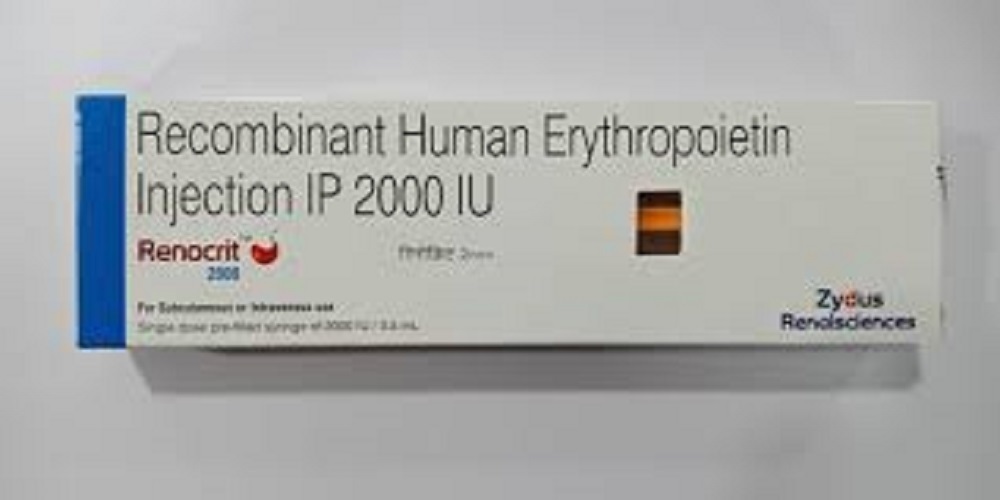
Product Description
Renocrit 2000IU injection should not be used in patients with hypersensitivity to it or any of its components, uncontrolled hypertension, active thrombotic microangiopathy (TMA), pure red cell aplasia (PRCA), uncontrolled seizures, pregnancy, or lactation. It should also be used cautiously in patients with a history of blood clots, heart disease, stroke, kidney disease, liver disease, thalassemia, sickle cell anemia, myelodysplastic syndrome, leukemia, or cancer. It should only be used in children under 18 if the benefits outweigh the risks. Older adults taking this medication should be closely monitored for side effects. Before starting this medication, it is important to talk to your doctor about the risks and benefits of Renocrit 2000IU injection.
Effective Anemia ManagementRenocrit Erythropoietin 2000 IU Injection addresses anemia in patients with chronic kidney disease, those undergoing chemotherapy, HIV therapy, or upcoming surgery. By supplementing the body's erythropoietin, it helps boost red blood cell production, improving oxygen delivery and overall energy levels for patients.
Safe and Supervised AdministrationThis medication is supplied as a pre-filled, single-use syringe and is meant strictly for use under medical supervision. Both subcutaneous and intravenous administration routes are available based on clinical assessment. Only trained individuals should handle self-injections, as improper use can lead to complications.
Rigorous Quality and Safety StandardsRenocrit is a biotechnologically produced solution that meets stringent national regulatory standards. Its safety profile is well-characterized, with side effects like hypertension, headaches, arthralgia, or injection site reactions monitored by healthcare professionals. Regular clinical visits are required to track hemoglobin and blood pressure.
FAQ's of Renocrit Erythropoietin 2000 Iu Injection:
Q: How is Renocrit Erythropoietin 2000 IU Injection administered?
A: Renocrit is administered either subcutaneously or intravenously. The exact route and frequency are determined by your healthcare provider according to your individual clinical response. It should not be used without a physician's prescription and supervision.
Q: What are the main benefits of using Renocrit Injection?
A: Renocrit helps manage anemia associated with chronic kidney disease, chemotherapy, HIV treatment with zidovudine, or elective surgery. It stimulates the production of red blood cells, thus increasing oxygen delivery throughout the body and helping reduce symptoms of anemia such as fatigue and weakness.
Q: When should Renocrit be used, and in what situations is it recommended?
A: Renocrit is recommended for anemia due to chronic kidney disease, chemotherapy-induced anemia, HIV infection receiving zidovudine, and in cases involving elective surgery where anemia is anticipated. Its use and dosage are tailored by your health provider based on your condition and response.
Q: Where should I store Renocrit Injection and what precautions should I follow?
A: Store Renocrit in a refrigerator at 2C - 8C. Do not freeze the product, and protect it from light. Ensure the pre-filled syringe is not used beyond its shelf life of 18 months from the date of manufacture. Always keep it out of reach of children.
Q: What side effects should I watch for while using Renocrit?
A: Common side effects include hypertension, headaches, joint pain (arthralgia), and injection site reactions. Rarely, it may cause pure red cell aplasia. If you notice any severe or unusual symptoms, contact your healthcare provider promptly.
Q: Can I self-administer Renocrit Injection at home?
A: Self-administration of Renocrit should only be done if you have been properly trained by a healthcare provider. Unsupervised use increases the risk of complications and dosing errors, so regular follow-up and instruction are essential.
Q: How will my health be monitored during Renocrit treatment?
A: Your hemoglobin levels and blood pressure will be regularly checked by your healthcare provider to ensure safe and effective use of Renocrit. Dose adjustments may be made based on your response to therapy and any side effects experienced.