Product Description
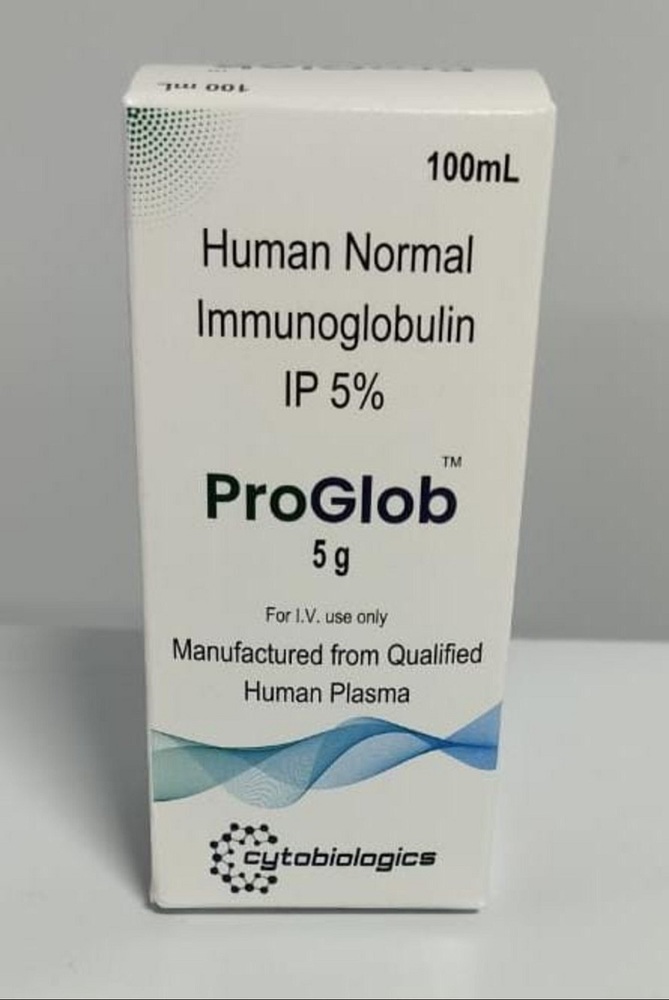
About Proglob 2.5 gm Injection 50 ml
Proglob 2.5 gm Injection 50 ml belongs to the class of medications called 'immunising agents used to treat immunoglobulin (antibody) deficiency and certain inflammatory disorders. It is used to treat immunoglobulin deficiency in people with primary immunodeficiency or PID (present from birth) and secondary immunodeficiency or SID (developed in the later stages of life). Proglob 2.5 gm Injection 50 ml is also used to treat inflammatory disorders such as primary immune thrombocytopenia (reduced number of platelets), Guillain-Barre syndrome (short-term inflammation of the peripheral nerves causing weakness of legs and upper limbs), Kawasaki disease (inflammation of blood vessels in children), chronic inflammatory demyelinating polyneuropathy or CIDP (long-term inflammation of peripheral nerves), and multifocal motor neuropathy (progressive disease leading to weakness of arms and legs).
Proglob 2.5 gm Injection 50 ml contains 'Human normal immunoglobulin, which replaces the deficient antibodies necessary to act against infections and inflammation. It works exactly as the immunoglobulins present in the body. Immunoglobulins are an essential part of the immune system, which recognises the antigens or foreign elements in the body and aids in their destruction. It also helps to reduce inflammation by improving immunity.
Proglob 2.5 gm Injection 50 ml will be administered by a trained healthcare professional; hence do not self-administer. This may cause side effects such as swelling or hardening at the injection site and headache, pain in the face, back, arms, legs, joints, or neck, fever, flu-like illness (runny nose and sore throat), blisters in the mouth, and throat, and throat tightness. These side effects are usually mild and temporary. However, if any of the side effects persist or get worse, inform your doctor immediately.
Comprehensive Immune SupportProglob IVIG provides a vital immune boost for individuals diagnosed with primary and secondary immunodeficiencies, certain autoimmune disorders, and select infections. By supplementing deficient or dysfunctional antibodies, Proglob helps restore and stabilize immune system function, thereby reducing the risk of infections and disease complications. It is an effective therapy for conditions such as Guillain-Barre syndrome, Kawasaki disease, and immune thrombocytopenia.
Strict Quality and Safety AssuranceManufactured with high-quality standards, Proglob's liquid formulation is devoid of latex, minimizing allergy risks related to packaging. The injection remains stable for up to 24 months when stored correctly and should only be handled by trained healthcare professionals. Its administration is closely monitored to prevent adverse reactions, ensuring optimal outcomes for both adult and pediatric patients.
FAQ's of Proglob 5 g injection IVIG:
Q: How should Proglob 5 g IVIG injection be administered?
A: Proglob IVIG is administered intravenously (IV) by a healthcare professional. The infusion rate and dosage are determined by the treating physician, ensuring safety and efficacy for each patient. Self-administration is not recommended.
Q: What are the primary benefits of using Proglob IVIG?
A: Proglob IVIG helps strengthen the immune system in patients with immunodeficiency or certain autoimmune conditions, reducing the frequency and severity of infections and helping manage immune-related disorders.
Q: When is Proglob IVIG typically prescribed?
A: Proglob is prescribed for patients suffering from primary or secondary immunodeficiency syndromes and select autoimmune diseases, such as Guillain-Barre syndrome and immune thrombocytopenia. It is also used in other conditions as determined by the physician.
Q: Where should Proglob 5 g vials be stored before use?
A: The vials should be stored below 25C, away from direct light. Freezing must be avoided to preserve the efficacy of the formulation.
Q: What precautions should be observed during Proglob IVIG administration?
A: Administration should be under close medical supervision, especially in patients with renal impairment. Infusion rates must not exceed the recommended levels to minimize potential adverse reactions such as mild fever or hypersensitivity.
Q: What are the possible adverse reactions when receiving Proglob IVIG?
A: Some patients may experience mild side effects including fever, chills, headache, nausea, or hypersensitivity reactions. Severe reactions are rare but should be reported immediately to the healthcare provider.
Q: Is Proglob suitable for all patients?
A: Proglob should not be used in individuals with a known hypersensitivity to human immunoglobulins or IgA deficiency patients with antibodies against IgA. Use is strictly as advised by a physician.