Product Description
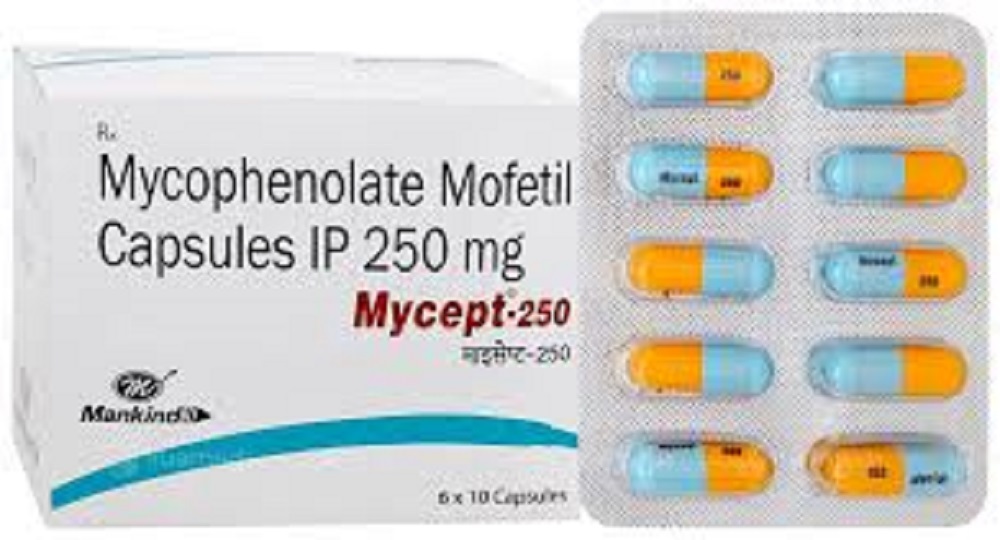
The amount of Mycept 250 Capsule you take and how often you take it depends on the type of transplant you have. Follow your doctors instructions on this. Take it on an empty stomach, at least 1 hour before or 2 hours after a meal, unless your doctor suggest otherwise. Swallow it as a whole, do not crush, chew, or break it. Take the medicine regularly to get maximum benefit and keep taking it even when you feel well. The treatment will continue for as long as you need it to prevent rejection.
The most common side effects of this medicine include nausea, vomiting, diarrhea, stomach pain, headache, high blood pressure, infections (viral, fungal, bacterial), and changes in the number of white blood cells amongst others. You may catch more infections than usual as medicine suppresses the immune system. There is also an increased risk of developing some cancers for this reason. To reduce your risk of skin cancer, limit your exposure to the sun and use sunscreen. There is a long list of potential side effects of this medicine. You should ask your doctor about them and what signs to look out for because some of them can be serious and need urgent medical attention.
Mycept 250 Capsule can cause birth defects and abortion so do not take it if you are pregnant, planning to become pregnant, or breastfeeding. You should talk to your doctor before taking this medicine if you have any signs of infection or if you have any unexpected bruising or bleeding. You should also let your healthcare team know all other medicines you are taking as they may affect, or be affected by, this medicine. You will have regular tests to check for any changes in the number of your blood cells and the amount of sugar and cholesterol in your blood.
Advanced Immunosuppressant for Post-Transplant CareMycept 250 mg Tablet, formulated with Mycophenolate Mofetil, delivers reliable immunosuppression to reduce the risk of organ rejection in patients following kidney, heart, or liver transplantation. Its precise dosage and oral tablet format ensure effective integration into post-transplant regimens, offering both convenience and consistent therapeutic action for adult patients.
Secure Packaging and Reliable Shelf LifeEach Mycept tablet is individually sealed within a blister strip, protecting the medication from light and moisture to maintain its stability. The product boasts a shelf life of 24 months, allowing healthcare providers and suppliers to stock and manage inventory with confidence. Follow the prescribed storage instructions for best results.
FAQ's of Mycept 250 mg Tablet:
Q: How should Mycept 250 mg Tablet be taken for optimal effectiveness?
A: Mycept 250 mg Tablet should be swallowed whole with water, according to your physician's instructions. Do not crush or chew the tablet, as this can affect its absorption and efficacy.
Q: What is the primary function of Mycept 250 mg Tablet?
A: Mycept 250 mg Tablet acts as an immunosuppressant, helping prevent organ rejection in adult patients who have undergone kidney, heart, or liver transplants.
Q: When is Mycept 250 mg Tablet prescribed and who can use it?
A: This tablet is prescribed to adults following organ transplantation, specifically after kidney, heart, or liver procedures, as part of an immunosuppressive regimen to prevent rejection.
Q: Where should Mycept 250 mg Tablets be stored to ensure their quality?
A: Store the tablets below 25C in a dry place, protected from light and moisture, as these conditions preserve the integrity and potency of the medication during its 24-month shelf life.
Q: What is the process for using Mycept 250 mg Tablet?
A: Take the medication orally and follow your healthcare provider's dosage instructions strictly. The tablets are packaged in blister strips, each containing ten tablets for ease of use and dose management.
Q: What are the benefits of using Mycept 250 mg Tablet post-transplant?
A: By suppressing the immune system's response, Mycept significantly lowers the risk of organ rejection, promoting recovery and long-term transplant success in adults.