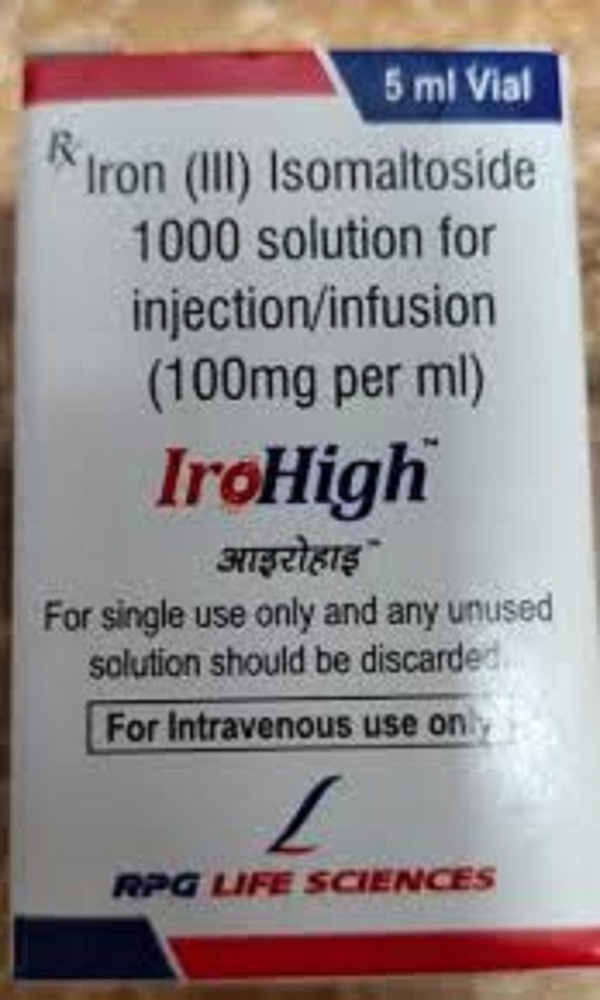
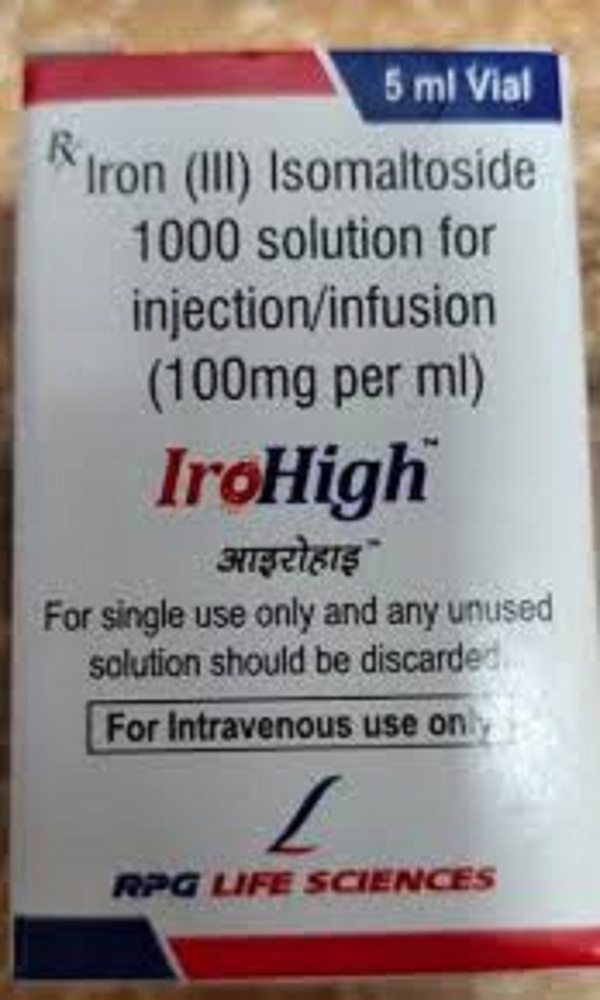
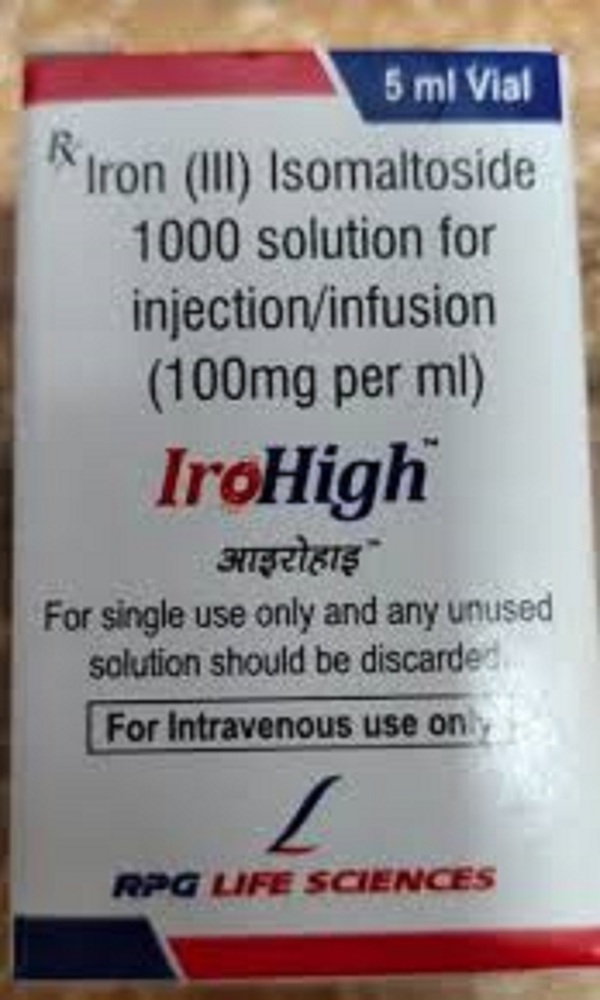
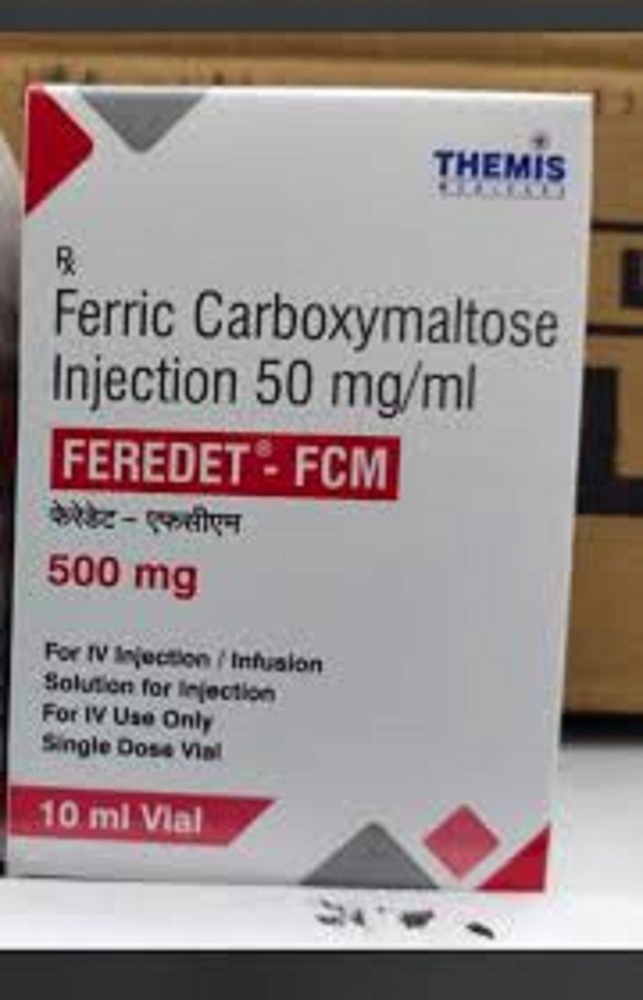
Product Description
Irohigh Injection is given as an injection by your doctor or nurse. You will be watched carefully to make sure you do not have an allergic reaction. Your doctor will decide how many doses you need depending on the cause of your anemia, it may help to eat a well-balanced diet that has enough iron, vitamins, and minerals. Good sources of iron include meat, eggs, raisins, broccoli, and lentils.
The most common side effects include vomiting, nausea, constipation, diarrhea, altered taste, hypotension, and injection site reaction. Most of these usually go away within a short time. If you are bothered by them or they go on for longer, talk to your doctor or nurse.
You should not have this medicine if your anemia is not caused by a lack of iron. Before taking it, tell your doctor if you have rheumatoid arthritis, asthma or other allergies, high blood pressure, or liver problems. This may affect your treatment. It is not known whether this medicine is safe for use if you are pregnant or breastfeeding so please take advice from your doctor. You will have tests to check your blood cells and iron levels, monitor your progress and check for side effects. It may be advisable to limit alcohol during treatment.
Indications and UsageIrohigh 1000 Mg Injection is indicated for iron-deficiency anemia in cases where oral supplementation is ineffective or contraindicated. It is particularly suitable for adults with chronic kidney disease, postpartum anemia, or those needing rapid restoration of iron levels. Administration is strictly via intravenous route, under professional medical care.
Precautions and SafetyThis injectable iron preparation should be prescribed and administered only by qualified healthcare professionals. It is contraindicated in individuals with known hypersensitivity to ferric carboxymaltose or any excipients, and those with anemia not caused by iron deficiency. Always consult a physician for proper dosing and monitoring.
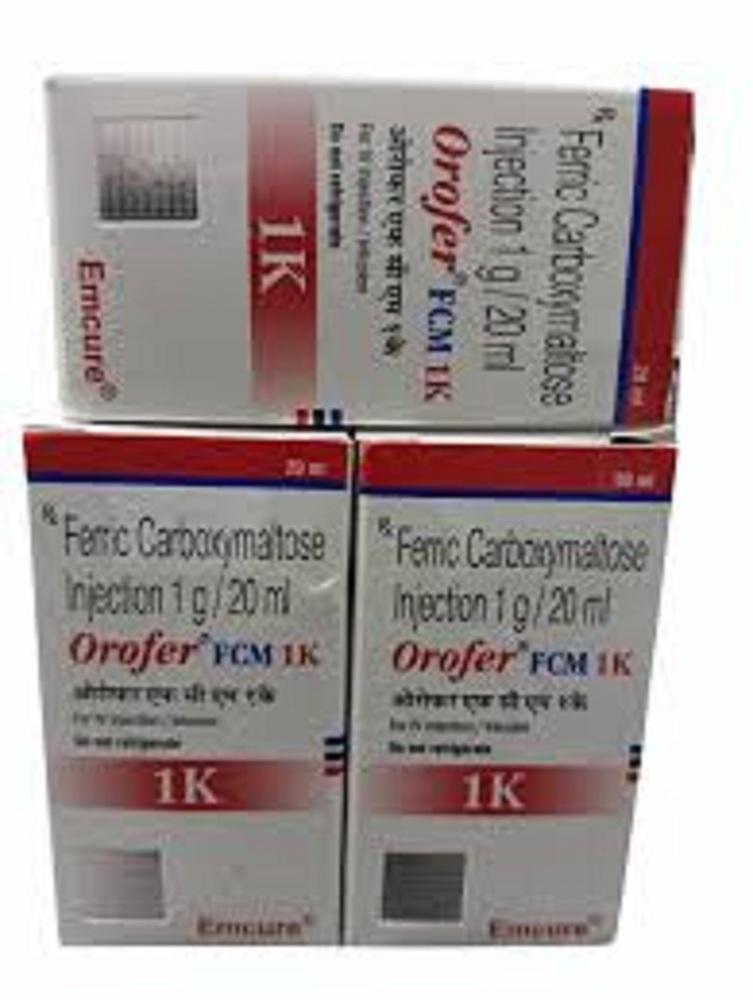
Product Handling and StorageEach 20 ml vial is supplied as a brown sterile liquid. Store Irohigh 1000 Mg Injection below 25C, protected from direct light, and never freeze. Proper storage ensures product stability and efficacy throughout its 24-month shelf life.
FAQ's of Irohigh 1000 Mg Injection:
Q: How is Irohigh 1000 Mg Injection administered?
A: Irohigh 1000 Mg Injection is administered intravenously, either by injection or infusion, strictly under the supervision of a healthcare professional.
Q: What conditions are treated with Irohigh 1000 Mg Injection?
A: This injection is used to treat iron deficiency anemia, particularly in patients with chronic kidney disease, postpartum anemia, or when rapid iron supplementation is required.
Q: When should Irohigh 1000 Mg Injection not be used?
A: It should not be used in individuals with hypersensitivity to ferric carboxymaltose or its excipients, nor in those with anemia unrelated to iron deficiency.
Q: Where should Irohigh 1000 Mg Injection be stored?
A: Store the injection below 25C, protected from light, and do not freeze. Proper storage is critical to maintain its quality and effectiveness.
Q: What is the recommended dosage for Irohigh 1000 Mg Injection?
A: Dosage is determined by a physician, typically up to 1000 mg (20 ml) per dose and not exceeding 15 mg/kg body weight, varying per patient needs.
Q: What are the main benefits of Irohigh 1000 Mg Injection?
A: The main benefit is rapid replenishment of iron stores, especially in patients where oral iron therapy is ineffective or contraindicated, leading to improved hemoglobin levels.
Q: Who can administer Irohigh 1000 Mg Injection?
A: Only trained healthcare professionals should administer this injection, ensuring patient safety and correct dosage.