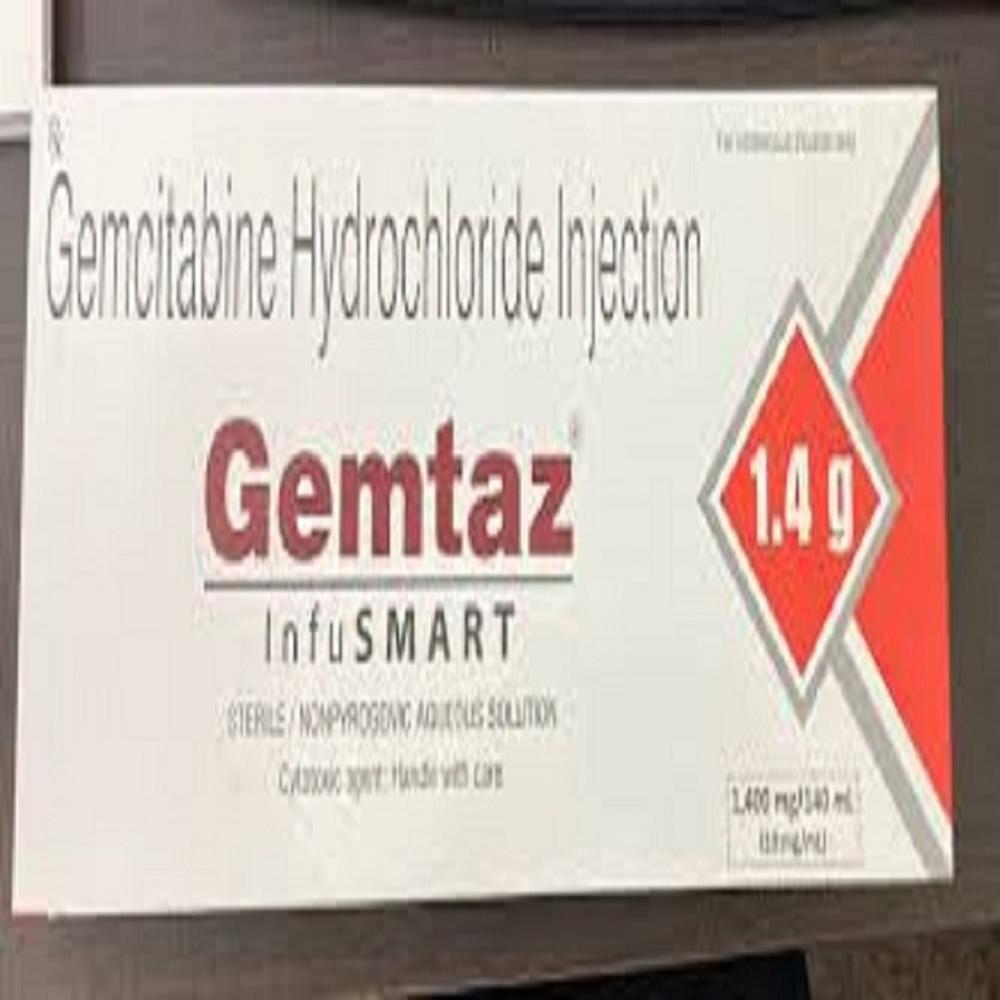
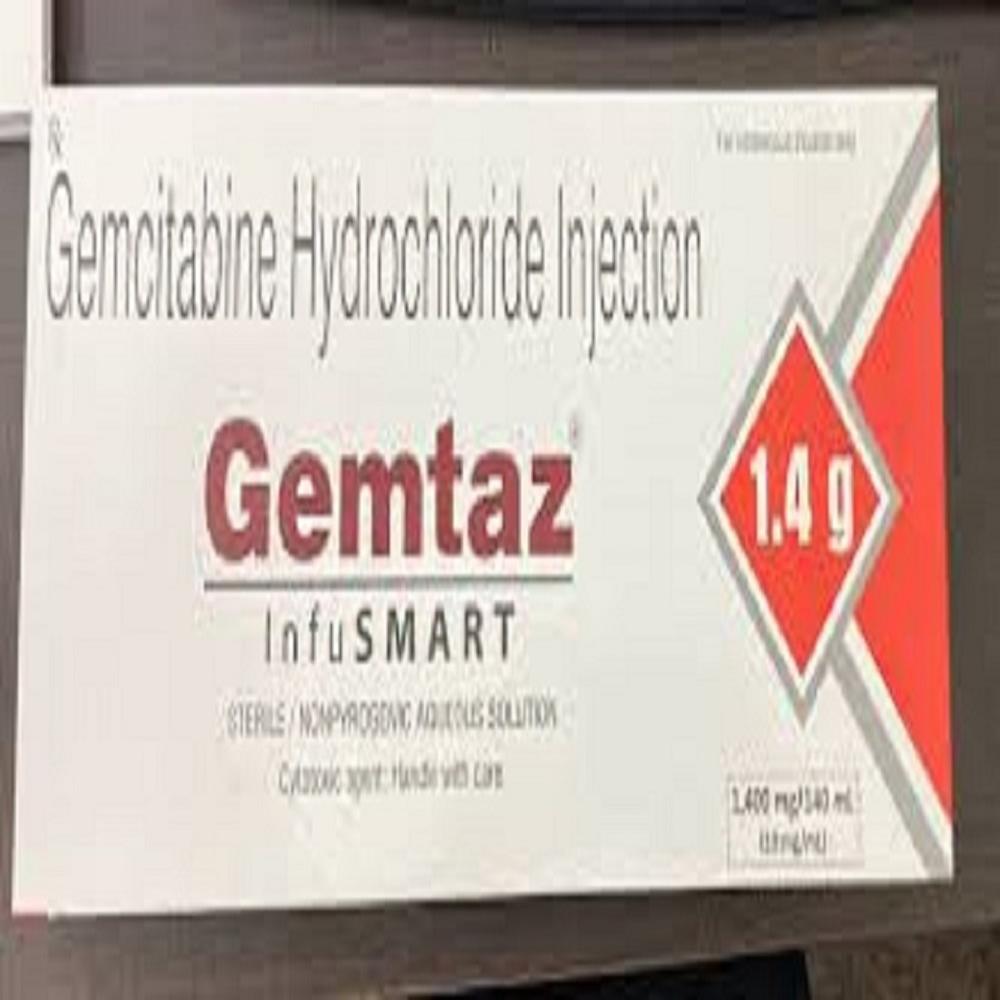
Product Description
Product introduction
Gemtaz Infusmart 1.4g Injection is used in the treatment of non-small cell lung cancer, breast cancer, pancreatic cancer, urinary bladder cancer, and ovarian cancer.
Gemtaz Infusmart 1.4g Injection is given as an injection by a qualified medical professional. Your doctor will decide what dose is necessary and how often you need to take it. This will depend on what you are being treated for and may change from time to time. You should take it exactly as your doctor has advised. Taking it in the wrong way or taking too much can cause very serious side effects. It may take several weeks or months for you to see or feel the benefits but do not stop taking it unless your doctor tells you to.
The most common side effects of this medicine include nausea, vomiting, loss of appetite, hair loss and low blood platelets. This medicine may reduce the number of blood cells (decrease red blood and white blood cells) in your blood, thereby, increasing the susceptibility to infections. Regular blood tests are required to check your blood cells along with heart, liver, and blood uric acid levels.
Before taking it, tell your doctor if you have heart disease, liver, or kidney problems or are taking any medicines to treat infections. Many other medicines can affect, or be affected by, this medicine so let your doctor know all medications you are using. This medicine is not recommended during pregnancy or while breastfeeding. The use of effective contraception by both males and females during treatment is important to avoid pregnancy.
Precise Anticancer TherapyGemtaz 1.4 G Injection falls under the antineoplastic class, specifically targeting a variety of cancers. Its efficacy and high purity make it a preferred choice for oncologists across India. Convenient packaging ensures accurate dosing and reduced waste.
Controlled AdministrationThis medication is prepared by reconstituting the lyophilized powder with 0.9% Sodium Chloride Injection, resulting in a solution with a pH near 7.0. Administration is exclusively intravenous, ensuring rapid and complete delivery directly to the bloodstream. Hospital settings further guarantee patient safety and close monitoring.
Stringent Safety RequirementsGemtaz must be prescribed and administered only by qualified healthcare professionals in a hospital setting. Patients with known hypersensitivity to Gemcitabine or any of the excipients must not receive this medication. Proper storage and handling are essential to maintain the product's integrity and effectiveness.
FAQ's of Gemtaz 1.4 G Injection:
Q: How should Gemtaz 1.4 G Injection be prepared and administered?
A: Gemtaz 1.4 G Injection must be reconstituted with 0.9% Sodium Chloride Injection to obtain a clear solution. It should be administered as an intravenous infusion under the supervision of an oncologist in a hospital setting.
Q: What types of cancer is Gemtaz 1.4 G Injection used to treat?
A: Gemtaz 1.4 G Injection is used for the treatment of several cancers, including pancreatic, lung, breast, and ovarian cancer, as prescribed by a medical professional.
Q: When is Gemtaz 1.4 G Injection contraindicated?
A: Gemtaz 1.4 G Injection should not be used in patients who have known hypersensitivity to Gemcitabine or any of its excipients.
Q: Where should Gemtaz 1.4 G Injection be stored?
A: The product should be stored below 25C, protected from light and moisture, to maintain its stability and efficacy.
Q: What are the key benefits of using Gemtaz 1.4 G Injection?
A: Gemtaz provides targeted therapy for various cancers, offering a high-purity, sterile formulation that ensures consistent dosing and reduced risk of contamination.
Q: What precautions should be taken when using Gemtaz 1.4 G Injection?
A: Gemtaz should only be used under the direct supervision of an oncologist in a hospital. It must be handled with proper care, and disposal should follow hospital protocols for cytotoxic agents.
Q: Who can prescribe and administer Gemtaz 1.4 G Injection?
A: Only qualified healthcare professionals, specifically oncologists in a hospital setting, are authorized to prescribe and administer this medication.