Product Description
Product introduction
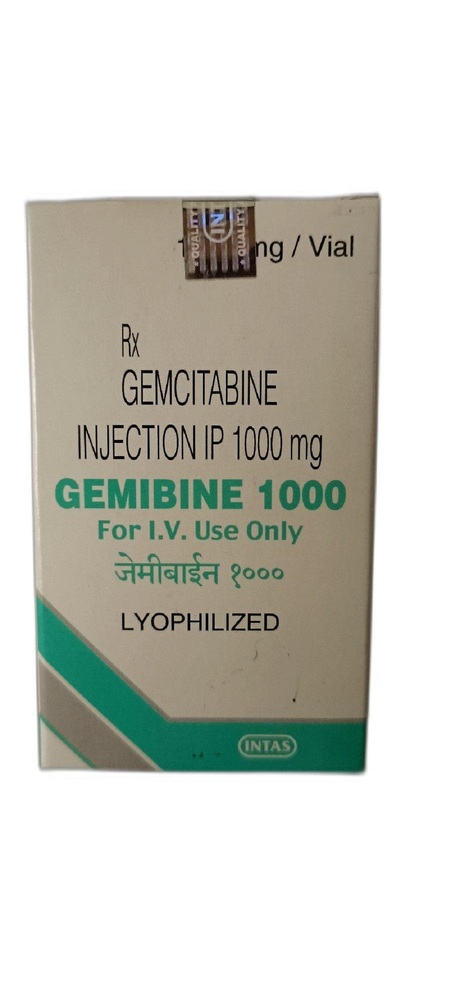
Gemibine 1000mg Injection is used in the treatment of non-small cell lung cancer, breast cancer, pancreatic cancer, urinary bladder cancer, and ovarian cancer.
Gemibine 1000mg Injection is given as an injection by a qualified medical professional. Your doctor will decide what dose is necessary and how often you need to take it. This will depend on what you are being treated for and may change from time to time. You should take it exactly as your doctor has advised. Taking it in the wrong way or taking too much can cause very serious side effects. It may take several weeks or months for you to see or feel the benefits but do not stop taking it unless your doctor tells you to.
The most common side effects of this medicine include nausea, vomiting, loss of appetite, hair loss and low blood platelets. This medicine may reduce the number of blood cells (decrease red blood and white blood cells) in your blood, thereby, increasing the susceptibility to infections. Regular blood tests are required to check your blood cells along with heart, liver, and blood uric acid levels.
Targeted Cancer Therapy for Multiple IndicationsGemibine 1000 Mg Injection is an integral part of modern cancer management, offering broad-spectrum activity against several tumor types. Its active salt, gemcitabine hydrochloride, disrupts cancer cell proliferation, making it suitable for treating pancreatic, breast, lung, bladder, and ovarian malignancies. Usage is strictly overseen by oncology specialists in hospital settings.
Preparation and Administration ProcessBefore administration, Gemibine Injection should be carefully reconstituted with 25 mL of normal saline to obtain a clear, colorless to slightly yellow solution. Only trained healthcare professionals should handle and infuse the drug intravenously, ensuring precision and safety. Strict adherence to hospital protocols guarantees both patient and handler protection from its cytotoxic effects.
Storage, Handling, and Safety PrecautionsTo preserve the medication's potency, Gemibine should be stored below 25C and protected from direct light. As a cytotoxic chemotherapy agent, it requires careful handling, and all procedures related to its use-reconstitution, administration, and disposal-must follow established medical guidelines. Shelf life extends up to 24 months when properly stored.
FAQ's of Gemibine 1000 Mg Injection.:
Q: How should Gemibine 1000 Mg Injection be administered?
A: Gemibine 1000 Mg Injection is administered by intravenous (IV) infusion after reconstituting the lyophilized powder with 25 mL of normal saline. Only qualified healthcare professionals should prepare and infuse the drug in a hospital or clinical setting.
Q: What types of cancer is Gemibine Injection commonly used to treat?
A: Gemibine Injection is used in chemotherapy regimens for a range of cancers, including pancreatic, lung, breast, bladder, and ovarian cancers, as directed by a specialist oncologist.
Q: When should Gemibine not be used, and what are important precautions?
A: Gemibine is a prescription-only cytotoxic drug and must not be used without medical supervision. It should not be self-administered or given outside a hospital, and is contraindicated in patients with known allergies to gemcitabine or related compounds.
Q: Where should Gemibine Injection be stored to maintain its effectiveness?
A: Store Gemibine Injection below 25C and protect it from light. Proper storage is crucial to ensure the product remains effective throughout its 24-month shelf life.
Q: What is the reconstitution process for Gemibine Injection?
A: Before administration, dissolve the powder in the vial with exactly 25 mL of normal saline. Mix gently until completely dissolved, resulting in a clear or slightly yellowish solution ready for IV infusion.
Q: What are the benefits of using Gemibine Injection in cancer treatment?
A: Gemibine provides broad antineoplastic effects, targeting DNA synthesis in cancer cells and helping to control tumor growth and spread in several major cancer types under medically supervised conditions.