Product Description
Product introduction
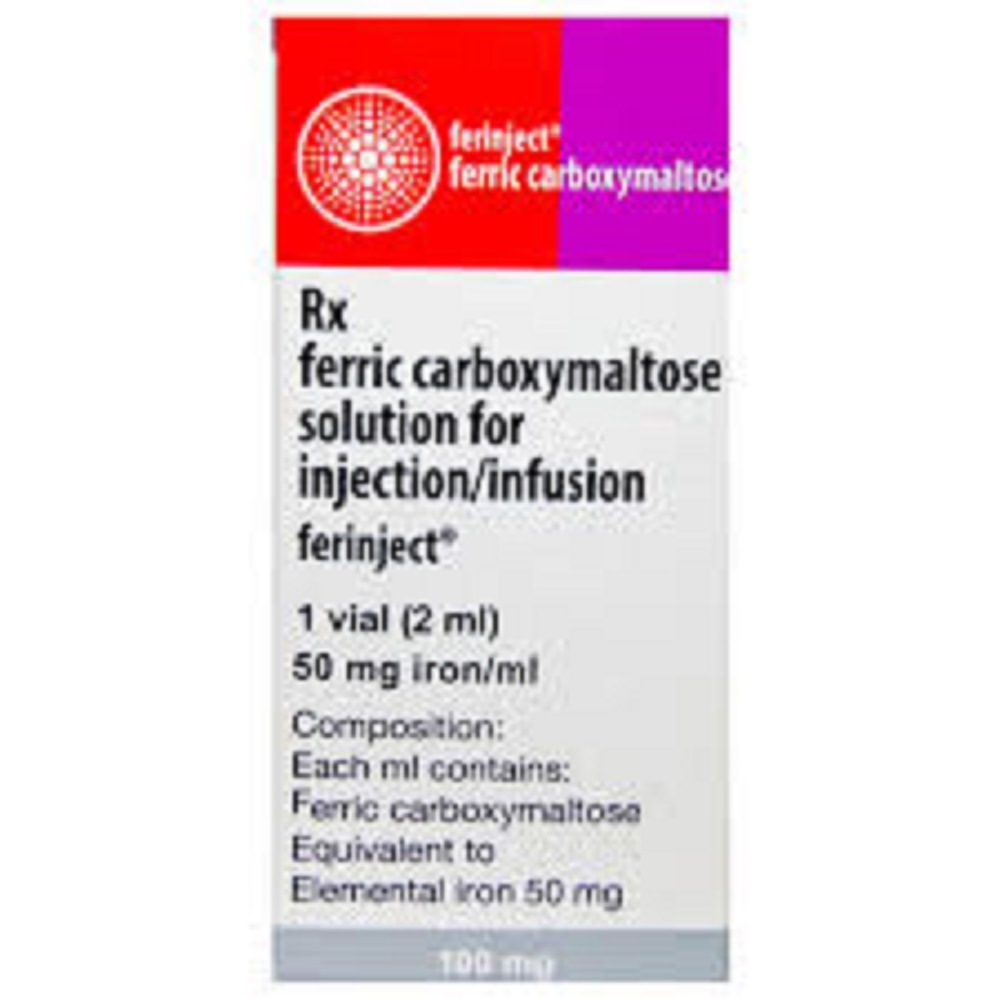
Ferinject 100mg Infusion is an iron replacement medicine. It is used to treat a type of anemia where you have fewer amount of red blood cells due to insufficient iron in your body (iron-deficiency anemia). Iron is needed to produce the red blood cells that carry oxygen around your body.
Ferinject 100mg Infusion is given by injection or infusion (saline drip) into a vein by your doctor or nurse. You will be watched carefully to make sure you do not have an allergic reaction. It is usually given in two doses, seven days apart. Your doctor will decide how much and how often you may need injections to improve your anemia. Eating a well-balanced diet that has enough iron, vitamins, and minerals can help to replenish your iron reserves. Good sources of iron include meat, eggs, raisins, broccoli, and lentils.
The most common side effects include vomiting, headache, dizziness, high blood pressure, and pain or irritation at the site of injection. Most of these usually go away within a short time of the injection. If you are bothered by them or they go on for longer, talk to your doctor or nurse. You should not have this medicine if your anemia is not caused by a lack of iron.
Before taking it, tell your doctor if you have rheumatoid arthritis, asthma or other allergies, high blood pressure, or liver problems. This may affect your treatment. It is not known whether this medicine is safe for use if you are pregnant or breastfeeding so please take advice from your doctor. You will have tests to check your blood cells and iron levels, monitor your progress, and check for side effects. It may be advisable to limit alcohol during treatment.
Efficient Iron Restoration for DeficiencyFerinject is formulated to address iron deficiency anemia in patients who cannot tolerate or do not respond adequately to oral iron supplements. It is highly effective for those with chronic kidney disease, cancer-related anemia, and for pregnant, lactating, or post-partum women. By restoring depleted iron levels, it helps improve energy, cognitive function, and overall health.
Safe and Convenient Hospital AdministrationThis intravenous injection is strictly administered by healthcare professionals in a hospital or clinical environment, ensuring precise dosing and close patient monitoring. Unlike some other iron therapies, Ferinject comes in a ready-to-use solution, eliminating the need for reconstitution. Careful monitoring during and after the infusion reduces the risk of hypersensitivity reactions.
Usage and Storage GuidelinesFerinject must be stored below 25C, protected from light, and should never be frozen. It should be administered slowly as an IV injection or infusion, following a physician's directions regarding dosage and frequency. Its packaging protects the solution's quality, while amber glass vials ensure the medication remains effective throughout its 24-month shelf life.
FAQ's of Ferinject 100 Mg Injection:
Q: How should Ferinject 100 mg Injection be administered?
A: Ferinject should only be given by a qualified healthcare professional as a slow intravenous injection or infusion in a hospital or clinic. Self-administration is not recommended due to the need for careful monitoring during and after administration.
Q: What are the main benefits of using Ferinject for iron deficiency anemia?
A: Ferinject quickly restores depleted iron levels in patients with iron deficiency anemia, particularly when oral iron treatments are ineffective or cause side effects. This leads to improved energy levels, better physical performance, and enhanced overall wellbeing.
Q: When is Ferinject injection typically recommended?
A: Ferinject is prescribed when oral iron therapies cannot be used or are not sufficiently effective, such as in cases involving chronic kidney disease, cancer patients, pregnant and lactating women, and post-partum anemia.
Q: Who should not receive Ferinject 100 mg Injection?
A: Ferinject is contraindicated in individuals with a known hypersensitivity to ferric carboxymaltose or any of its excipients, those with iron overload syndromes, or anemia not caused by iron deficiency.
Q: What precautions should be followed during Ferinject administration?
A: Patients should be closely monitored during and after the injection for any signs of hypersensitivity reactions. The injection should be administered slowly, and only by medical professionals in a controlled setting.
Q: How is Ferinject supplied and stored?
A: Ferinject comes as a dark brown solution in a 10 ml amber glass vial, containing 100 mg of Ferric Carboxymaltose per vial. It should be stored below 25C, protected from light, and must not be frozen.
Q: What conditions can Ferinject treat and who is it suitable for?
A: Ferinject is indicated for iron deficiency anemia when oral iron is unsuitable. It is recommended for adults and children above 14 years, including those with chronic kidney disease, cancer, and for women during pregnancy, lactation, or post-partum periods, always as prescribed by a physician.