Product Description
Product introduction
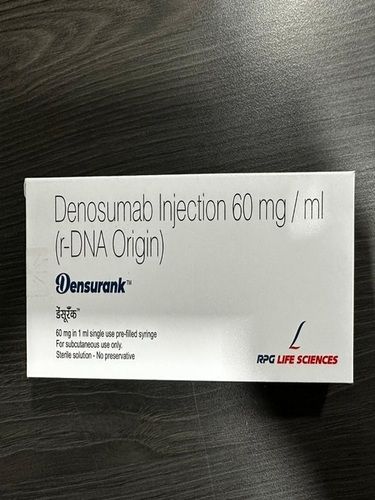
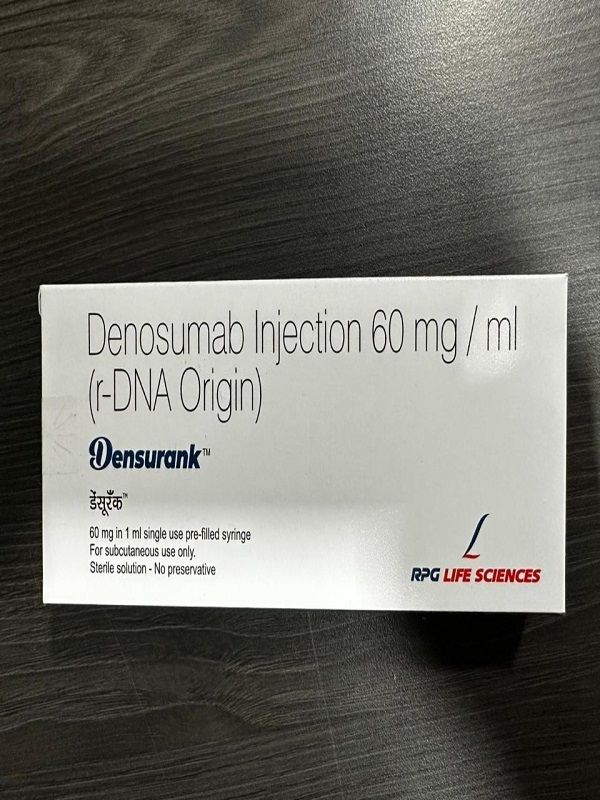
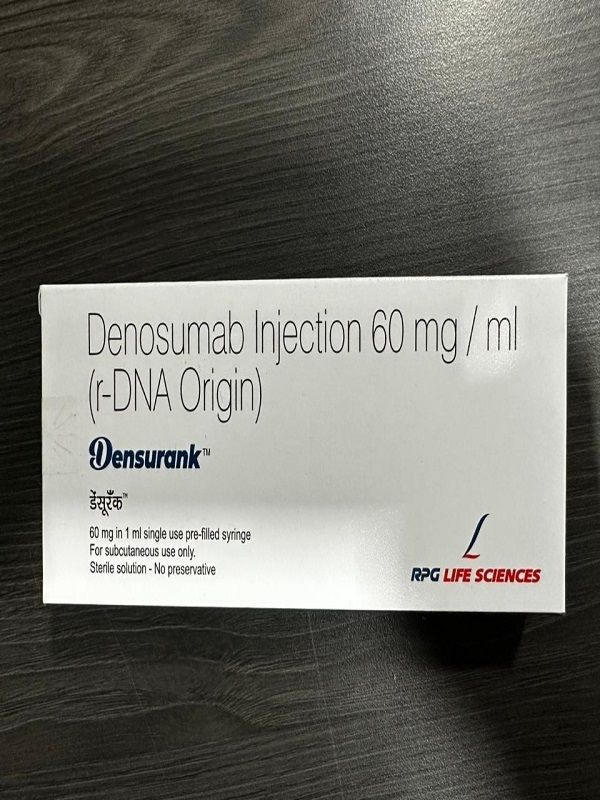
Densurank 60mg Injection is a medicine used in the treatment of osteoporosis in postmenopausal women and in men at increased risk of fractures. It makes the bones strong and reduce the risk of fractures.
Densurank 60mg Injection is given by a healthcare professional and should not be self-administered. You should use it regularly and at the same time each day to get maximum benefit from it. Continue using it as recommended by your doctor and complete the dose even if you feel better. To make it more effective, take adequate amount of calcium and vitamin D supplements while on treatment with this medicine.
Some common side effects of this medicine include headache, pain in extremity, musculoskeletal pain, nerve pain, constipation, and rash. Talk to your doctor if any of these side effects does not go away with time or get worse. Your doctor may help with ways to reduce or prevent these symptoms.
To make sure the medicine is safe for you, before taking it, let your doctor know of all the other medicines you are taking. It is important for pregnant and breastfeeding mothers to ask the advice of their doctors before using this medicine.
Uses of Densurank Injection
Side effects of Densurank Injection
Most side effects do not require any medical attention and disappear as your body adjusts to the medicine. Consult your doctor if they persist or if youre worried about them
How Densurank 60 Mg Injection WorksDensurank 60 Mg Injection works by inhibiting the activity of osteoclasts, the cells responsible for bone breakdown. Its key ingredient, Denosumab, helps prevent bone resorption and promotes the maintenance and enhancement of bone mass and strength, especially beneficial for patients with osteoporosis and those experiencing bone loss due to hormone therapies in cancer treatment.
Process and Administration DetailsThis medication is administered as a subcutaneous injection, typically in the upper arm, thigh, or abdomen. It is essential that Densurank be given by a healthcare professional in a clinical setting to ensure safe and accurate dosing. Each vial is meant for single use only, and any remaining solution must be discarded.
Usage and Storage InstructionsBefore administering Densurank, ensure that the solution is clear and colorless to slightly yellow, with no visible particles. The injection should be stored in a refrigerator at 2C to 8C and kept out of the freezer. Always check the expiry date on the packaging before use. Proper storage maintains the effectiveness and safety of the medication.
FAQ's of Densurank 60 Mg Injection:
Q: How should Densurank 60 Mg Injection be administered?
A: Densurank 60 Mg Injection must be administered as a subcutaneous injection by a qualified healthcare professional. Self-administration is not recommended. Common injection sites include the upper arm, thigh, or abdomen.
Q: What is the recommended dosage for Densurank 60 Mg Injection?
A: The dosage is determined by the prescribing physician based on the patient's specific medical needs. Always follow the doctor's instructions and do not alter the dose without medical advice.
Q: When is Densurank 60 Mg Injection typically prescribed?
A: Densurank is commonly prescribed for adults with osteoporosis or those experiencing bone loss, particularly due to hormone ablation therapy in cancer patients. It helps to strengthen bones and prevent fractures.
Q: Where should Densurank 60 Mg Injection be stored?
A: Store Densurank in a refrigerator at temperatures between 2C and 8C. Avoid freezing the vial, and keep it in its original packaging to protect it from light until use.
Q: What benefits does Densurank 60 Mg Injection offer?
A: This injection helps prevent bone breakdown, preserves bone density, and increases bone strength. It is particularly effective for individuals at risk of bone fractures due to osteoporosis or bone loss associated with certain cancer treatments.
Q: Why is it important to discard unused Densurank after opening?
A: Densurank is for single-use only. Any unused portion must be discarded to prevent infection and maintain sterility, as reusing or storing partially used vials may pose health risks.