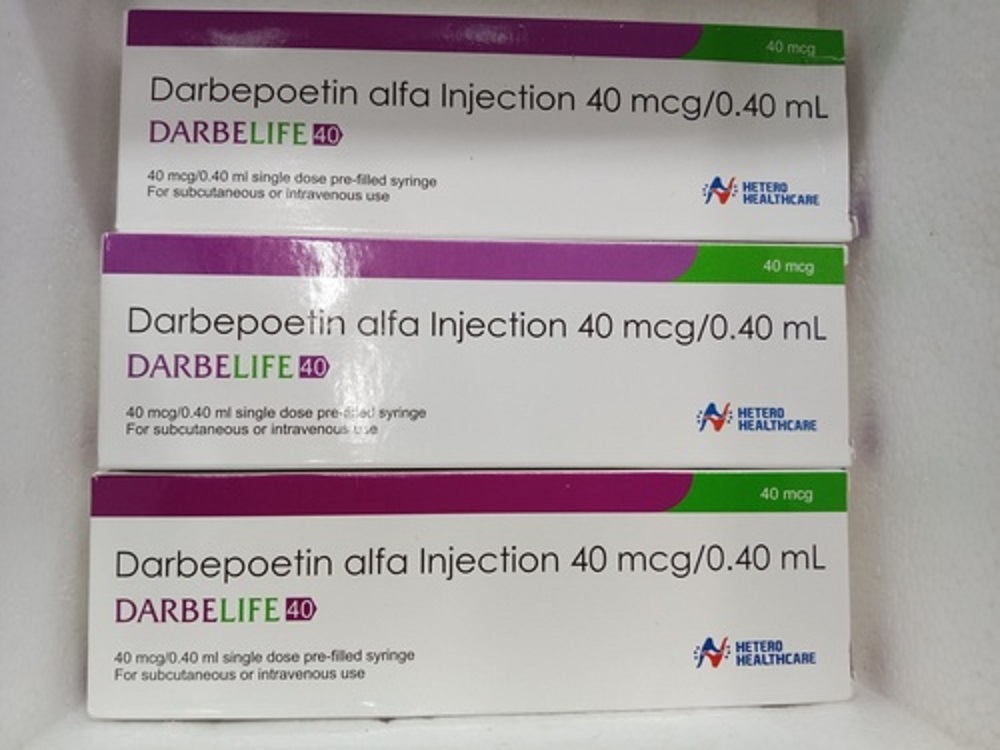
Product Description
Product introduction
Darbelife 40mcg Pfs Injection is used in the treatment of anemia that may have occurred due to chronic kidney disease or chemotherapy. It works by stimulating the bone marrow to produce more red blood cells.
Darbelife 40mcg Pfs Injection is a medicine that needs to be used with utmost care because it can lead to serious side effects. It is important that you seek treatment from a doctor who is experienced in providing this medical therapy. You should follow all the directions of the doctor strictly. It is given under the supervision of a healthcare professional.
Common side effects include abdominal pain, high blood pressure, rash, injection site pain, breathlessness, cough, and peripheral edema. Inform your doctor if there are symptoms of very high blood pressure, such as severe headache, problems with your eyesight, nausea, vomiting, or fits (seizures).
Your doctor may get your blood tests done regularly to monitor the levels of salts (electrolytes such as potassium), hemoglobin, and blood cells in your blood. You should stop taking it and consult with a doctor if you develop shortness of breath or a skin rash.
How Darbelife 40 Mcg Injection WorksDarbelife 40 Mcg Injection contains Darbepoetin Alfa, an erythropoiesis-stimulating agent that helps the bone marrow produce more red blood cells. This process alleviates symptoms of anemia often experienced by patients with chronic renal failure or those undergoing chemotherapy. Enhancing red blood cell levels can reduce fatigue and improve overall quality of life.
Appropriate Usage and Dosage GuidelinesDarbelife 40 Mcg Injection is to be administered either subcutaneously or intravenously, as advised by your healthcare provider. The typical dosage is 40 mcg once weekly, but exact dosing may vary based on individual needs and hemoglobin targets. Never shake the syringe, and do not use if the solution appears discolored or contains particles. Always follow your doctor's instructions.
Storage and Handling InstructionsMaintain the efficacy of Darbelife 40 Mcg Injection by storing it in a refrigerator at 2C to 8C. Do not freeze or expose to light. Before use, inspect the solution and avoid using if any color changes or particles are noticed. Proper handling ensures safe administration and preserves its therapeutic benefits.
FAQ's of Darbelife 40 Mcg Injection:
Q: How should Darbelife 40 Mcg Injection be administered?
A: Darbelife 40 Mcg Injection should be administered either subcutaneously (under the skin) or intravenously (into the vein) according to your doctor's instructions. It is typically given once a week or as prescribed.
Q: What is Darbelife 40 Mcg Injection used for?
A: This injection is indicated for the treatment of anemia in patients undergoing chronic kidney disease management or receiving chemotherapy. It helps restore the body's red blood cell levels.
Q: When should I avoid using Darbelife 40 Mcg Injection?
A: Do not use this product if you have a known hypersensitivity to Darbepoetin Alfa or any inactive components in the formulation. It is also important to inform your doctor about your medical history before starting treatment.
Q: Where should I store Darbelife 40 Mcg Injection?
A: Store it in a refrigerator at a temperature between 2C and 8C. Ensure the solution is protected from light and never freeze the prefilled syringe to maintain its effectiveness.
Q: What are the common side effects of Darbelife 40 Mcg Injection?
A: Common side effects include hypertension, reactions at the injection site, headache, bone pain, and fever. Monitoring by a healthcare provider is recommended to manage these effects effectively.
Q: How does Darbelife 40 Mcg Injection benefit anemia patients?
A: By stimulating red blood cell production in the bone marrow, Darbelife improves oxygen-carrying capacity in the blood, relieving symptoms of anemia like tiredness and weakness, leading to better daily functioning.
Q: Should I consult my doctor before using Darbelife with other medications?
A: Yes, it is crucial to inform your healthcare provider about any other medications you are taking, as drug interactions may require dosage adjustments or additional monitoring.