Product Description
Product introduction
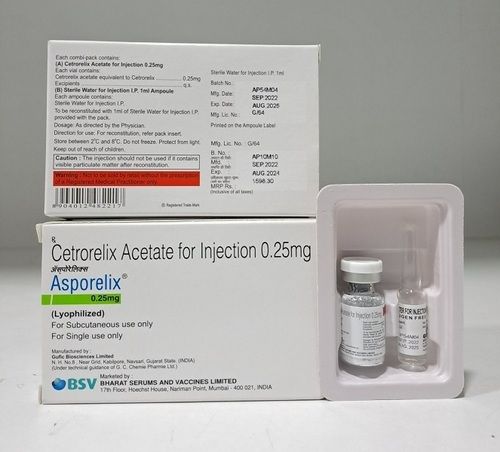
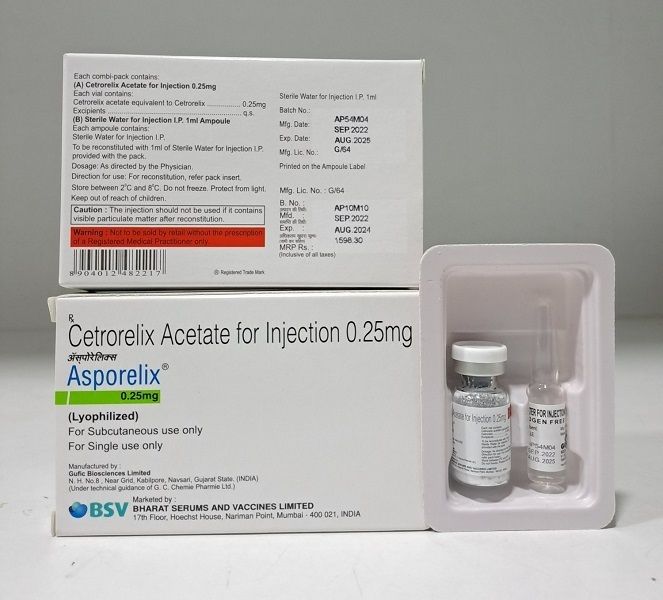
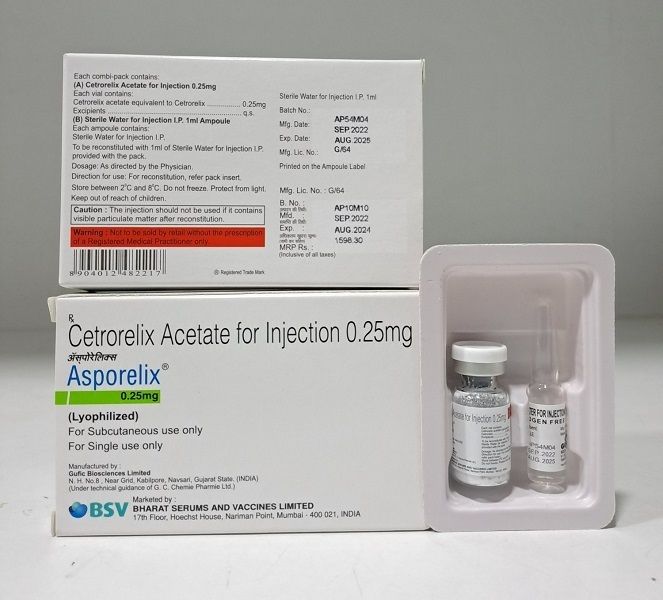
Asporelix 0.25mg Injection is an anti-gonadotropin-releasing hormone medicine. It is used in the treatment of infertility in females. It restricts eggs to release directly and prevents premature ovulation.
Asporelix 0.25mg Injection is injecting directly into the skin under the supervision of a doctor. Do not self administer the injection. Your doctor or nurse may help you to know the best way to inject the medicine at home. The dose and how often you take it depends on what you are taking it for. Your doctor will decide how much you need to improve your symptoms. You should take this medicine for as long as it is prescribed for you.
The most common side effects of this medicine include injection site reaction (redness, itching, and irritation), nausea and vomiting. To overcome irritation at the injection site, use a different part of belly every day to inject the medicine. Some side effects may mean you should inform your doctor immediately include dizziness, faint, abdominal pain, and vomiting.
Before taking this medicine, tell your doctor if you have ever had liver or kidney disease or if you are breastfeeding to a baby. Your doctor should also know about all other medicines you are taking as many of these may make this medicine less effective or change the way it works.
Uses of Asporelix Injection
Benefits of Asporelix Injection
In Female infertility
Asporelix 0.25mg Injection prevents release of premature eggs during a process called ovulation in females. This helps in normal development of an egg in a woman's ovary (female reproductive organ), and stimulates the release of a healthy, matured egg. This helps to treat infertility in women and increases the chance of a successful pregnancy. It is given as an injection by a doctor or nurse and should not be self-administered. You should use the medicine as prescribed for it to be effective.
Why Cetrorelix Acetate is Essential in ARTCetrorelix Acetate serves a critical role in ART procedures by effectively preventing premature LH surges. By maintaining proper hormonal balance, it enhances the chances of successful egg retrieval, improving outcomes for women undergoing IVF or similar treatments. This intervention is vital to prevent early ovulation, allowing healthcare providers greater control of the reproductive process.
Appropriate Administration and Storage GuidelinesThis medication must be administered subcutaneously, typically in the abdominal area, exactly as prescribed by a healthcare professional. The injection is available as a ready-to-use pre-filled syringe, ensuring precise dosing. Store the product in a refrigerator (2C to 8C) and avoid freezing. Proper storage helps retain the medication's efficacy throughout its 24-month shelf life from the date of manufacture.
FAQ's of Cetrorelix Acetate 0.25 Mg Injection:
Q: How should Cetrorelix Acetate 0.25 mg Injection be administered?
A: Cetrorelix Acetate 0.25 mg Injection must be administered subcutaneously, usually in the lower abdomen. Your healthcare professional will provide detailed instructions and may administer the injection in a clinical setting or guide you on self-administration at home.
Q: What is the main benefit of using Cetrorelix Acetate during IVF procedures?
A: The primary benefit is the prevention of premature LH surges, which helps avoid early ovulation. This allows for better control over egg maturation and retrieval timing, significantly enhancing the chances of a successful IVF cycle.
Q: When should Cetrorelix Acetate injections be started during ART treatment?
A: Cetrorelix Acetate is usually started after the beginning of ovarian stimulation, as directed by your specialist, to prevent premature ovulation. Your specific start date and duration will be determined by your fertility doctor based on your treatment plan.
Q: Where should I store the Cetrorelix Acetate injection before use?
A: Store the pre-filled syringe in a refrigerator at a temperature between 2C to 8C. Do not freeze the injection, and keep it in its original packaging to protect it from light until you are ready to use it.
Q: What are the possible side effects of this injection?
A: The most common side effects include mild local reactions such as redness or swelling at the injection site, headache, and nausea. If you experience signs of allergy such as rash, itching, or difficulty breathing, seek immediate medical attention.
Q: Who should not use Cetrorelix Acetate 0.25 mg Injection?
A: This medication is contraindicated for individuals with known hypersensitivity to Cetrorelix Acetate or similar compounds. Always inform your physician about any allergies or adverse reactions to medications before starting treatment.
Q: What should I do if I miss a dose of Cetrorelix Acetate?
A: If you miss a dose, inform your healthcare provider as soon as possible. Do not attempt to self-administer a missed dose without professional guidance, as timing is essential in ART protocols.